

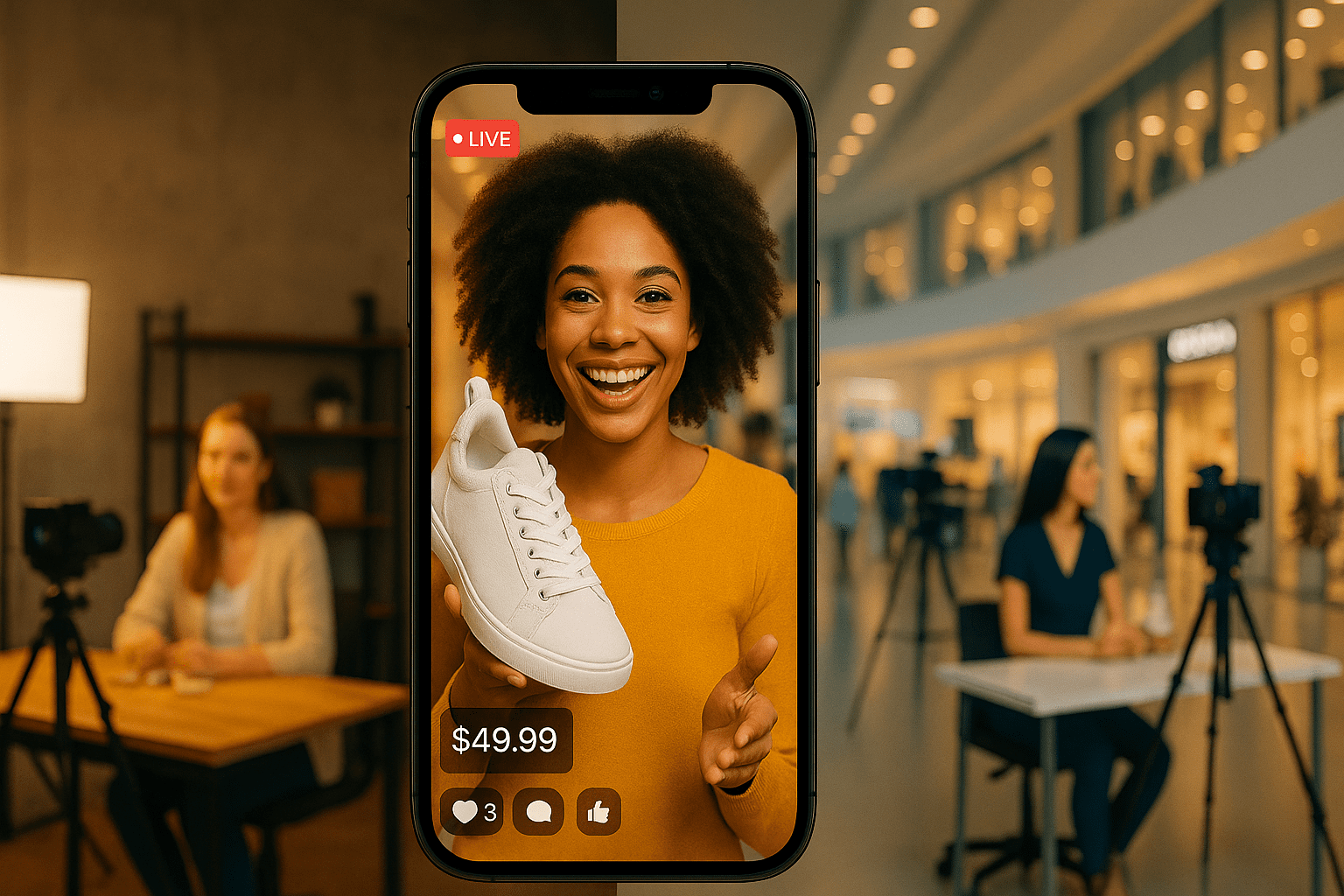
Scaling a successful live commerce strategy isn’t just about frequency – it’s about consistency and conversion. This is especially true as Social Commerce is adopted by the Enterprise. As more big brands jump into the livestream commerce race, the ability to sustain multiple high-performing streams per week – across TikTok Shop, Instagram Live, YouTube Shopping and beyond – has become a differentiator. But volume without structure is chaos. The best-performing commerce operations aren’t guessing: they have repeatable processes, trained talent, and systems that reinforce what works and fix what doesn’t.
And at the centre of it all is the livestream host. Not the celebrity influencer with generic talking points, but the trained presenter who knows the product, understands the format, and can turn fleeting viewer attention into transactions. Hosts are the face of your brand in motion – and for platforms like TikTok, how that face performs affects everything from stream success to the algorithmic health of your shop and channel.
Why the First 15 Minutes Matter More Than You Think
Livestream algorithms are ruthlessly efficient. TikTok, for example, assesses early engagement – likes, comments, viewer retention – within the first 15 minutes of a stream to determine its reach potential. Start slow, and you might not recover. Begin with silence, filler music, or “we’re just waiting for people to join” chatter, and your stream may be effectively buried.
Instead, treat minute one like prime time. Lead with your strongest pitch, clearest visuals, and immediate calls to action. The algorithm – and your viewers – respond to energy. A cold open is not just bad television. It’s commercial self-sabotage.
A Structured Host Training Programme
Great livestream hosts are made, not born. While charisma helps, what drives results is training – structured, ongoing, and grounded in performance data. Here’s what an effective programme looks like:
1. Product Mastery
Hosts should know their products inside out. This means more than reading a spec sheet – they should understand key selling points, common objections, how items compare to competitors, and what matters most to different customer segments. Clients have reported higher conversion rates and stronger customer retention when hosts demonstrate authentic expertise.
2. On-Camera Presence
Live shopping isn’t theatre, but it is performance. Hosts should be coached in voice projection, body language, eye-line discipline (look at the lens, not the phone screen), and how to stay composed under pressure. Unexpected moments – from trolls to tech hiccups – are inevitable. What matters is how the host handles them.
3. Engagement Tactics
Effective hosts don’t just talk – they interact. Training should include how to acknowledge individual commenters, weave storytelling into product demos, and pace the stream to include moments for Q&A. The goal is retention, not a monologue.
4. Conversion-Focused Selling
Hosts must know how to sell, not just show. This includes:
– Building urgency (“only 10 left!”)
– Cross-selling and upselling (“this pairs perfectly with…”)
– Highlighting limited-time offers
– Handling objections on the fly
The difference between describing and persuading is measurable – in AOV, conversion rates, and repeat purchases.
Feedback Loops and Performance Tracking
Training isn’t one-and-done. To maintain quality and improve over time, hosts need regular feedback based on hard data. That’s where platforms like Stickler come in – by analysing viewer retention, engagement drop-off points, and conversion heatmaps, you can pinpoint exactly where a stream succeeded or failed.
We have clients who use this data to run weekly host reviews, assigning internal scores based on stream performance. Viewer exits at 7 minutes? That’s where the host lost the room. Spike in engagement during a demo? That’s a clip to replicate.
Avoiding Common Pitfalls
Even experienced hosts make mistakes that hurt performance. Watch out for:
– Long silences or dead air
– Distracted behaviour (checking phones on camera)
– Off-screen conversations
– Background music with copyright risks
These aren’t small issues – they can tank engagement, irritate viewers, or get your stream flagged by platforms.
Motivation, Incentives and Accountability
Hosts are performers – and like any performer, they respond to feedback, recognition, and incentives. Smart teams:
– Offer commission or bonuses based on stream sales
– Use gamified leaderboards or scorecards
– Recognise top performers publicly
– Apply structured demerit systems for consistent issues
Clients using these methods report stronger host retention and fewer quality dips. Live commerce is hard to scale without a motivated, accountable front line.
Conclusion: Better Hosts, Better Streams, Better Sales
Livestream success isn’t luck – it’s trained, tracked, and repeatable. Hosts who know what they’re doing convert better, represent your brand more effectively, and build trust with your audience. Whether you’re running 3 streams a week or 30, host quality is the single most controllable driver of performance.
Stickler is built to make this easier – offering tools to track stream health, analyse host performance, and feed insights directly into training and development. Scaling live commerce takes more than product – it takes people. Start with the ones in front of the camera.
If you want more tips and tricks and social commerce news, then subscribe to our SubStack to get more: https://substack.com/@stickler



 English (UK)
  Français
  Deutsch
  Italiano
  Bahasa Indonesia
  ไทย
ไทย  Bahasa Melayu
  Tiếng Việt
  Tagalog
  Español
  Español de México
  Português do Brasil
  日本語
日本語  简体中文
简体中文
Leave a Reply